What Is a Proportionate Face? Meaning, Features & Real Examples
What Is a Proportionate Face?
Introduction
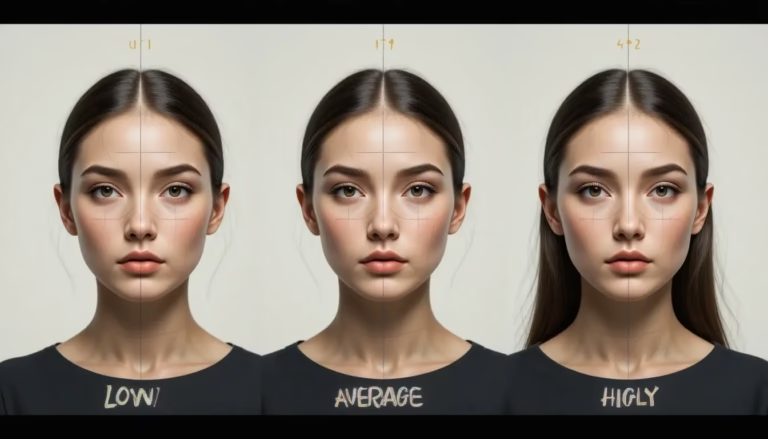
What does it mean to have a “proportionate face”? You’ve probably heard this term in discussions about beauty, facial aesthetics, and symmetry, but it’s often misunderstood.
A proportionate face doesn’t mean perfection—it refers to how well different facial features are balanced and aligned. In modern AI face analysis and facial aesthetics, proportions play a key role in understanding facial harmony and attractiveness.
What Is a Proportionate Face?
A proportionate face is one where facial features are well-balanced in terms of:
This includes the relationship between:
When these elements are in harmony, the face appears more natural, balanced, and visually appealing.
Key Characteristics of a Proportionate Face
Key Characteristics of a Proportionate Face
1. Balanced Facial Thirds
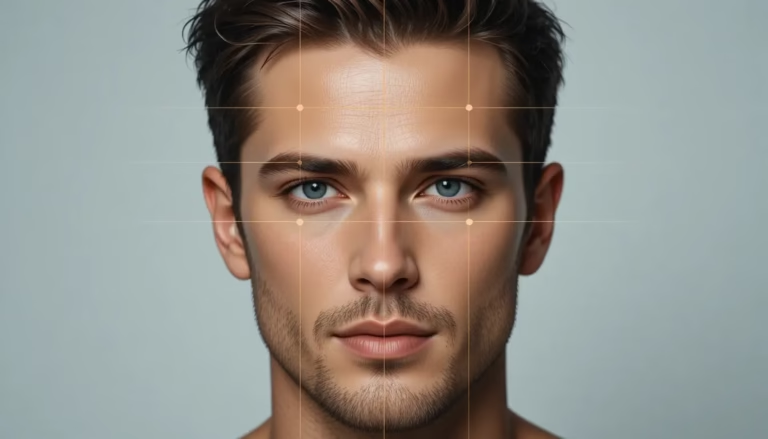
The face is often divided into three equal parts:
- Forehead to eyebrows
- Eyebrows to nose
- Nose to chin
When these sections are equal, the face looks more structured.
2. Proper Eye Spacing
The ideal distance between the eyes is approximately the width of one eye, creating visual balance.
3. Aligned Facial Features
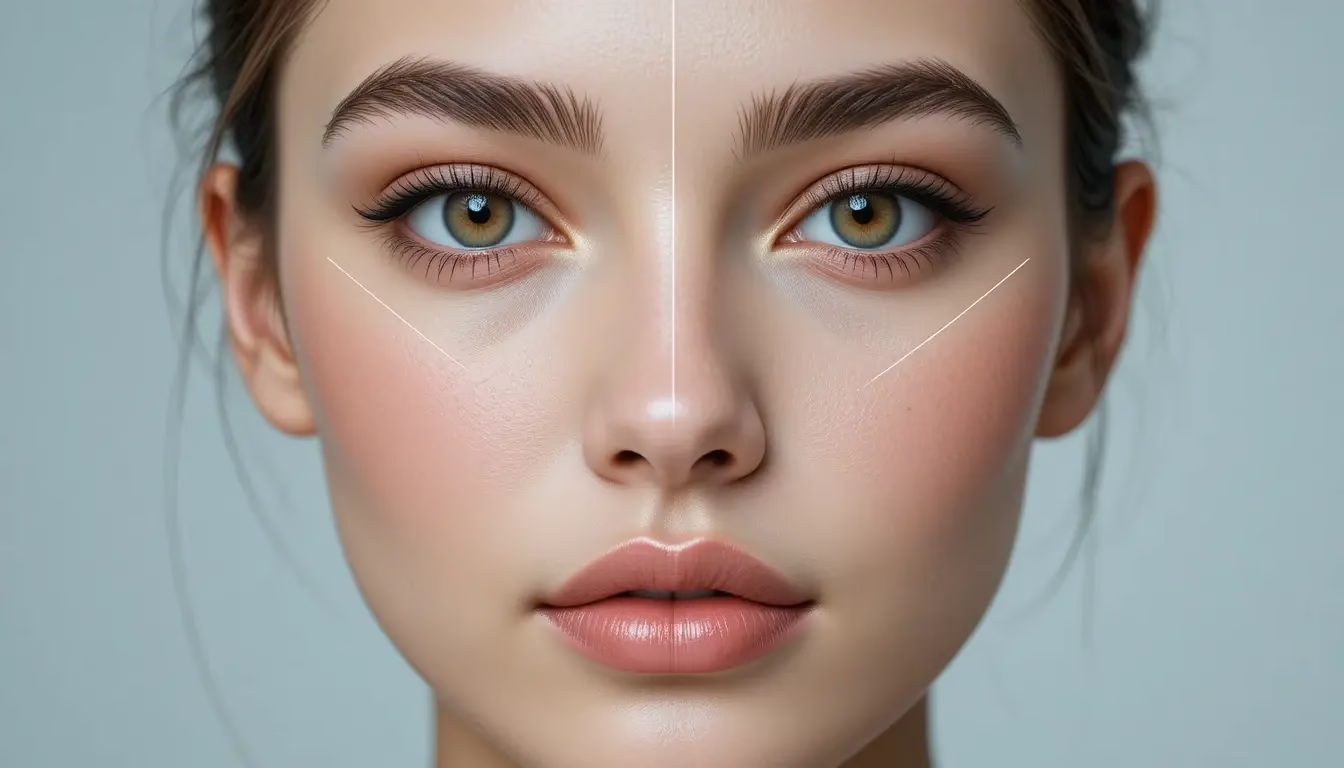
The nose, lips, and chin should align vertically for a more harmonious appearance.
4. Proportional Width Ratios
The width of the nose and mouth should be proportionate to the overall face width.
Proportionate Face vs Symmetrical Face
These two concepts are often confused but are not the same.
- Proportionate face → focuses on size and spacing of features
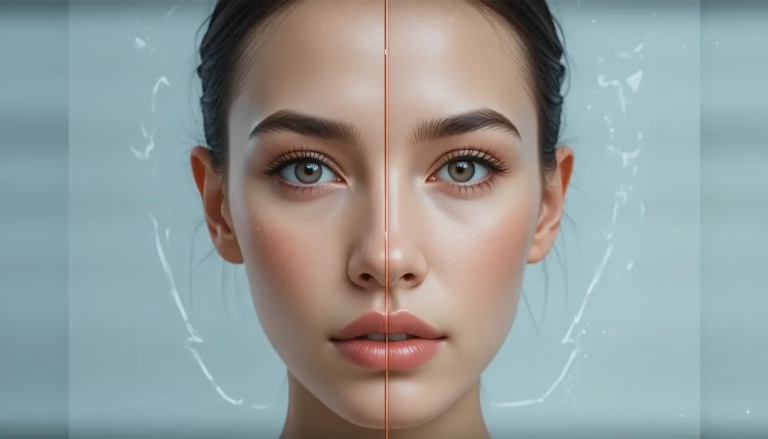
- Symmetrical face → focuses on left-right balance
👉 Learn more about face symmetry and how it affects beauty.
A face can be proportionate without being perfectly symmetrical—and still look attractive.
Role of the Golden Ratio in Proportion
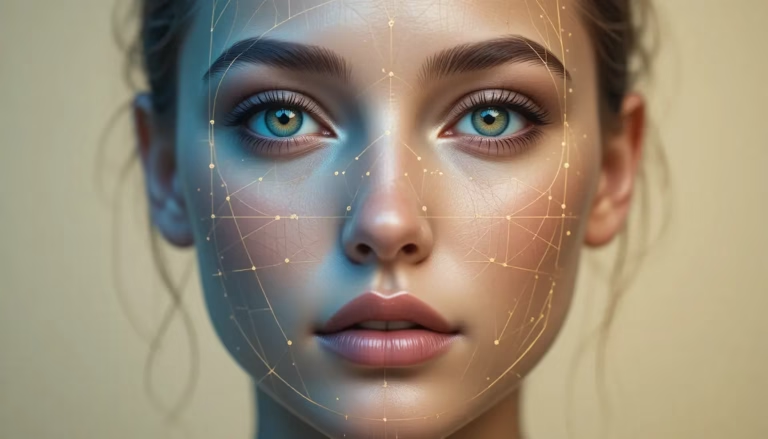
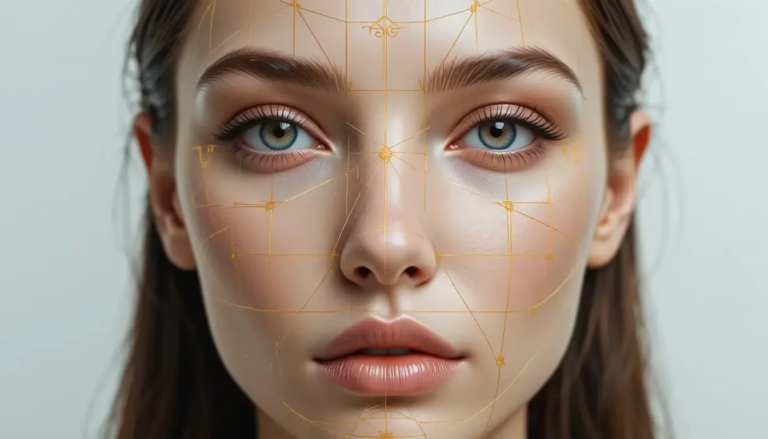
The Golden Ratio (Φ ≈ 1.618) is commonly used to evaluate facial proportions.
It compares:
- Face length to width
- Eye spacing
- Nose and mouth ratios
👉 For a deeper explanation, read how the Golden Ratio applies to the human face.
This concept helps explain why certain faces appear more balanced.
How AI Detects a Proportionate Face
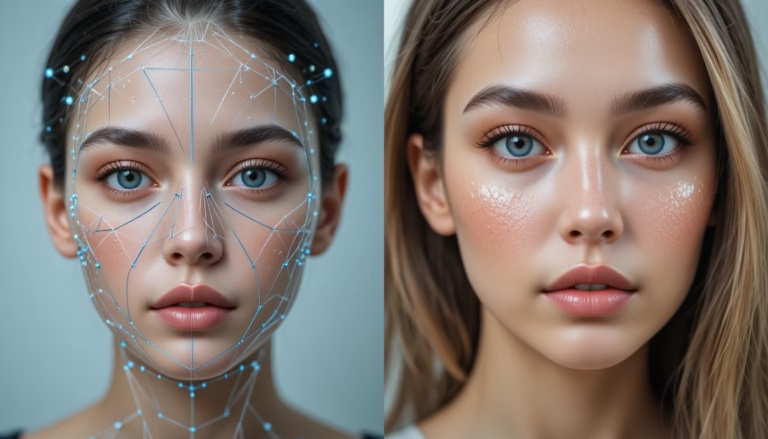
Modern systems use AI face analysis and facial landmark detection to measure facial structure.
These tools:
- Map key facial points
- Measure distances and ratios
- Evaluate proportional alignment
- Generate structured analysis
You can explore this using an AI face analyzer that evaluates facial proportions and harmony.
Examples of Proportionate Faces
In real life, proportionate faces can be seen in:
- Well-balanced everyday faces
- Models and public figures
- Digitally analyzed facial structures
👉 However, most attractive faces are not mathematically perfect—they simply have good overall balance.
Common Misconceptions
❌ “A proportionate face must be perfect”
Not true. Small variations are natural and normal.
❌ “Only symmetrical faces are attractive”
Proportion and symmetry are different factors.
❌ “Beauty can be fully measured”
Mathematics helps—but beauty also includes personality and expression.
How to Improve Facial Proportion (Visually)
While structural proportions are mostly genetic, appearance can be enhanced through:
These can improve how proportions are perceived.
Conclusion
A proportionate face is defined by balance, alignment, and harmony between facial features—not perfection.
While concepts like the Golden Ratio and AI facial analysis provide useful insights, attractiveness is influenced by both science and individuality.
👉 Curious about your facial proportions? Try an AI-based facial analysis tool to explore your facial balance and structure.