
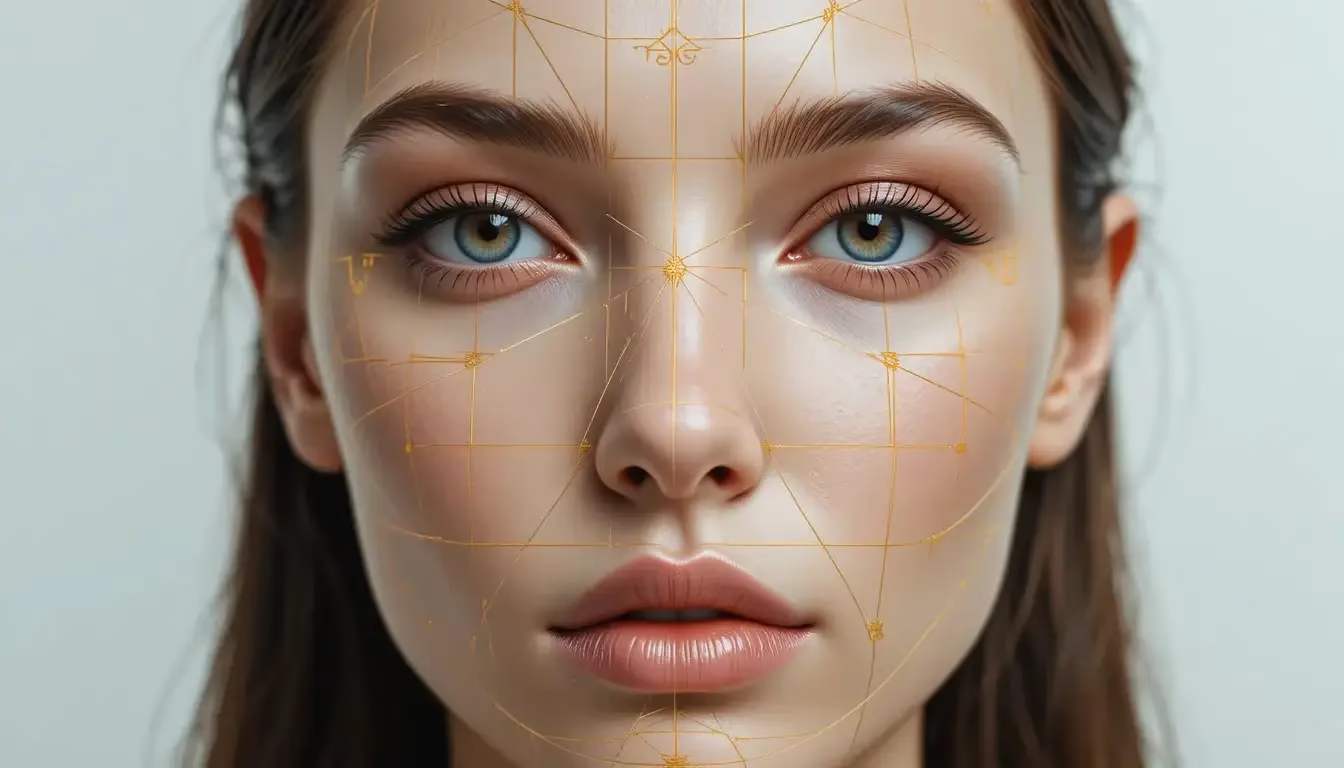
What Is Face Symmetry and Why Does It Matter in Beauty?
What Is Face Symmetry?
Introduction:
Why do some faces appear more attractive than others? One of the most important factors is face symmetry—a key concept in facial aesthetics, psychology, and beauty science.
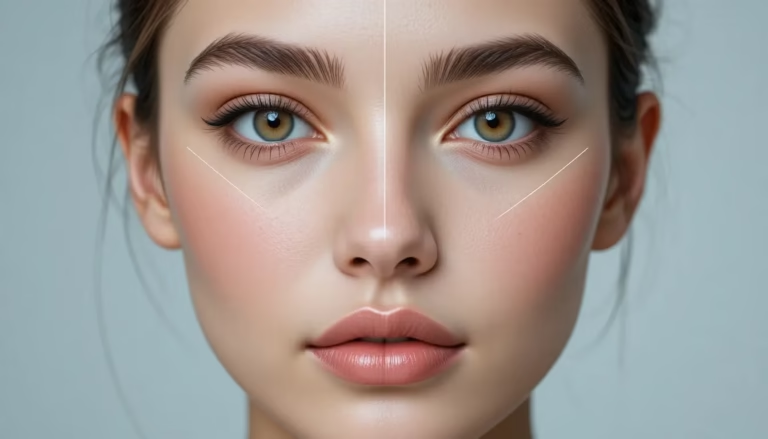
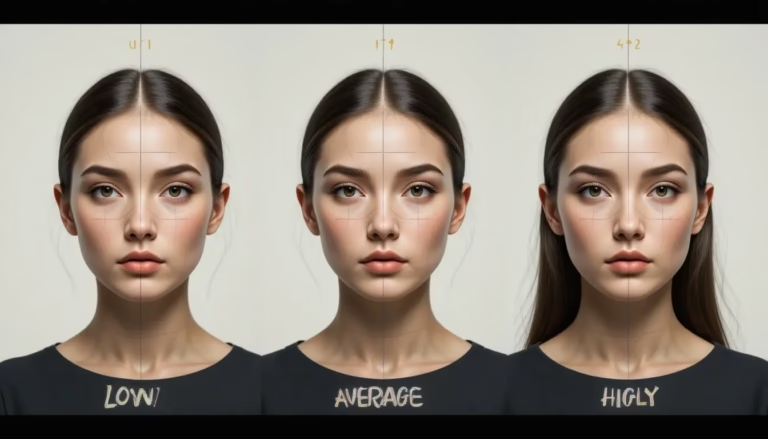
Face symmetry refers to how similar the left and right sides of the face are. In modern AI face analysis tools and computer vision systems, symmetry is used as a measurable indicator of facial balance, proportion, and visual harmony.
But does perfect symmetry really define beauty? Let’s explore.
What Is Face Symmetry?
Face symmetry means that both halves of the face mirror each other in terms of:
- Eye position and spacing
- Eyebrow shape and alignment
- Nose placement
- Lip structure
- Jawline balance
In reality, perfect symmetry is extremely rare. Most human faces have slight asymmetry, which is completely natural.
In facial analysis, symmetry is not about perfection—it’s about balance and proportional alignment.
Why Face Symmetry Is Associated with Beauty
Face symmetry is often linked with attractiveness due to both biological and psychological factors.
How Face Symmetry Is Measured
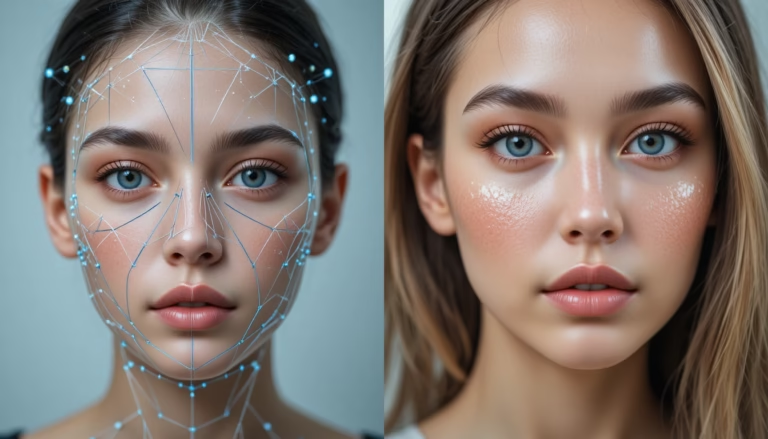
Traditionally, symmetry was evaluated visually. Today, modern facial symmetry analysis tools use advanced techniques like:
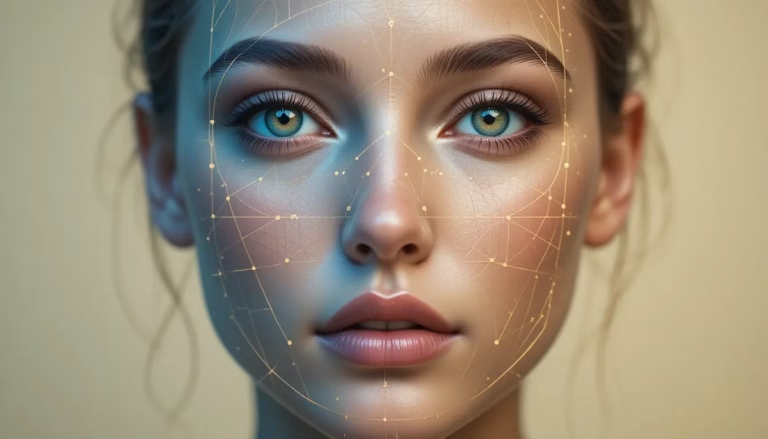
- Facial landmark detection
- Geometric mapping of facial features
- Distance and ratio calculations
- Left vs right side comparison
These methods allow systems to analyze:
- Eye alignment
- Nose positioning
- Lip balance
- Overall facial structure
This process is part of modern biometric analysis and computer vision technology.
Face Symmetry vs Golden Ratio
While often used together, face symmetry and the Golden Ratio are not the same.
- Face symmetry → compares left and right balance
- Golden Ratio → measures ideal proportions between facial features
👉 These concepts are commonly used in digital tools that evaluate facial structure and harmony.
Together, they provide a more complete understanding of facial harmony and aesthetics.
Is Perfect Symmetry Necessary for Beauty?
No—perfect symmetry is not required to be attractive.
In fact:
- Slight asymmetry adds character and uniqueness
- Many well-known attractive faces are not perfectly symmetrical
- Expression, personality, and confidence also play a major role
Modern beauty analysis systems focus on overall harmony, not perfection.
Factors That Affect Facial Symmetry
Several natural and environmental factors influence symmetry:
- Genetics
- Aging
- Facial expressions
- Lifestyle habits (sleep, posture)
- Lighting and camera angle in photos
This is why symmetry can vary slightly in different images.
How to Improve Facial Balance (Realistically)
While you can’t completely change bone structure, you can improve perceived symmetry:
- Maintain good posture
- Use balanced lighting in photos
- Practice relaxed facial expressions
- Grooming and styling (hair, beard, makeup)
These adjustments can enhance visual symmetry without altering natural features.
Conclusion
Face symmetry is a fundamental concept in facial aesthetics and beauty science, representing balance, structure, and harmony.
While it plays an important role in attractiveness, it is only one part of a much broader picture that includes facial proportions, individuality, and expression.
👉 Curious about your facial balance? Try an AI face analyzer to explore your symmetry, proportions, and overall facial structure.


7 Comments