

What Makes a Face Attractive? A Science-Based Explanation
What Makes a Face Attractive?
Introduction:
Why are some faces considered more attractive than others? Is beauty purely subjective, or is there a scientific explanation behind it?
Modern research in facial aesthetics, psychology, and AI face analysis shows that attractiveness is influenced by measurable factors such as facial symmetry, proportions, and structural balance. While beauty is personal and cultural, science provides a framework to understand what makes a face visually appealing.
Key Factors That Influence Facial Attractiveness
Attractiveness is not based on a single feature—it is the result of multiple elements working together.
1. Facial Symmetry
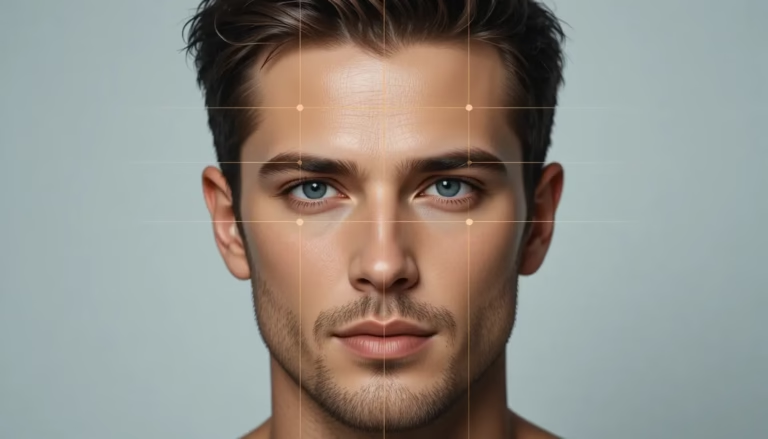
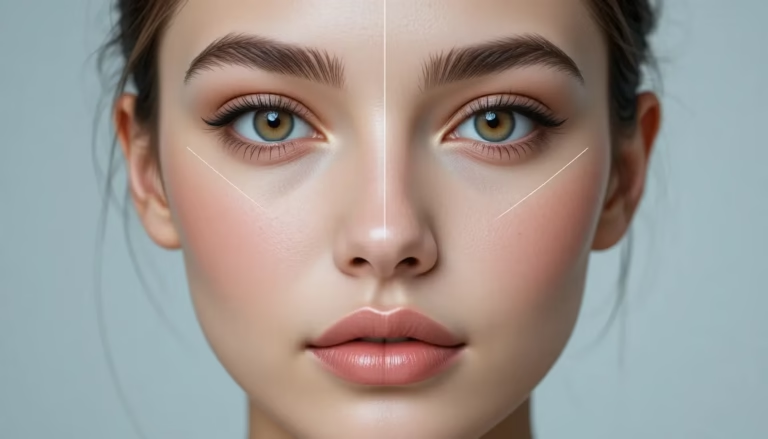
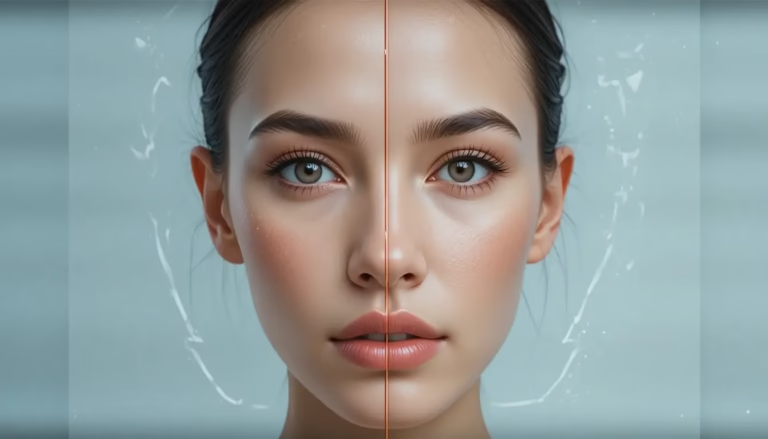
Symmetry refers to how similar both sides of the face are. Balanced faces are often perceived as more attractive because they appear more structured and harmonious.
👉 Learn more about face symmetry and its role in beauty.
2. Facial Proportions
The relationship between different facial features plays a major role in attractiveness.
These include:
Distance between the eyes
Nose width compared to face width
Lip positioning and alignment
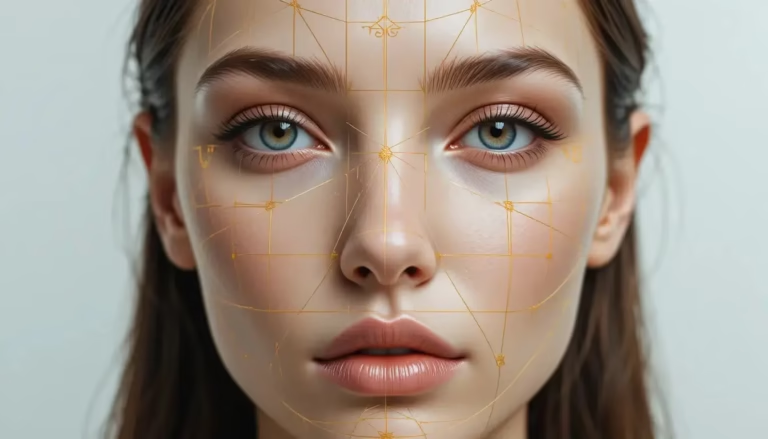
These proportions are often analyzed using concepts like the Golden Ratio (Φ ≈ 1.618).
3. The Golden Ratio in Beauty
The Golden Ratio, also known as Phi (1.618), is a mathematical proportion used to evaluate balance and harmony.
It compares:
Face length to width
Eye spacing
Nose-to-mouth ratio
👉 If you want a deeper explanation, read about Golden Ratio applies to beauty.
4. Facial Harmony
Attractiveness depends on how well all features work together—not just individually.
Even if features are not perfect, a face can still appear attractive if there is overall balance and alignment.
5. Skin Quality and Texture
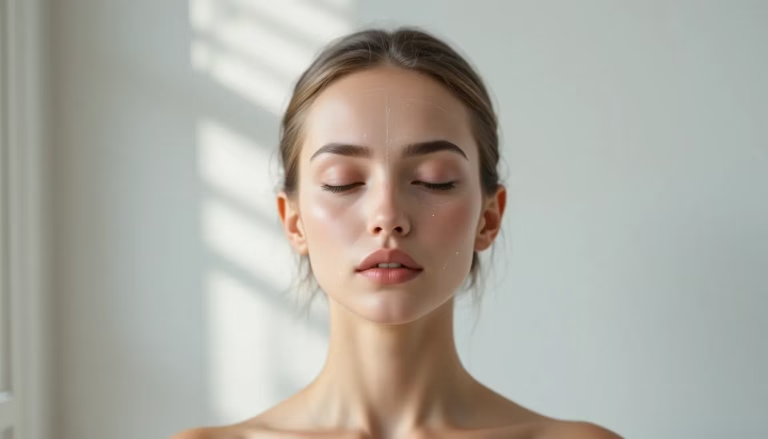
Clear and healthy-looking skin often enhances perceived attractiveness.
While this is not part of mathematical analysis, it strongly affects visual perception.
How Science and AI Analyze Facial Attractiveness
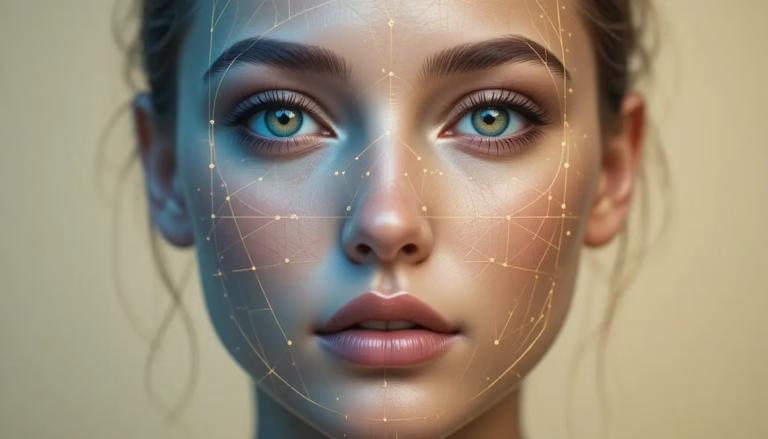
Modern systems use AI face analysis and computer vision to evaluate facial features.
These technologies:
Detect key facial landmarks
Measure distances between features
Analyze proportions and symmetry
Generate structured attractiveness insights
You can explore this using an AI face analyzer that evaluates facial structure and balance.
Is Attractiveness Universal or Subjective?
This is where things get interesting.
🔹 Universal Factors
Symmetry
Proportion
Balance
🔹 Subjective Factors
Cultural preferences
Personal taste
Trends and media influence
👉 This means beauty is both scientific and subjective at the same time.
Common Misconceptions About Beauty
❌ “Perfect symmetry = perfect beauty”
Not true. Slight asymmetry adds uniqueness.
❌ “There is one perfect face”
Attractiveness varies across cultures and individuals.
❌ “Beauty can be fully measured by numbers”
Mathematical models help—but they don’t tell the full story.
How to Enhance Facial Attractiveness Naturally
While you can’t change bone structure easily, you can improve overall appearance:
Maintain good posture
Use proper lighting in photos
Keep facial expressions relaxed
Grooming and styling
These factors can improve perceived facial balance and harmony.
Conclusion
Facial attractiveness is influenced by a combination of symmetry, proportions, and harmony, supported by both scientific research and AI-based analysis.
However, beauty is not defined by numbers alone. It is shaped by individuality, expression, and cultural perception.
👉 Curious about your facial structure? Try an AI-based facial analysis tool to explore your proportions and balance.
One Comment