
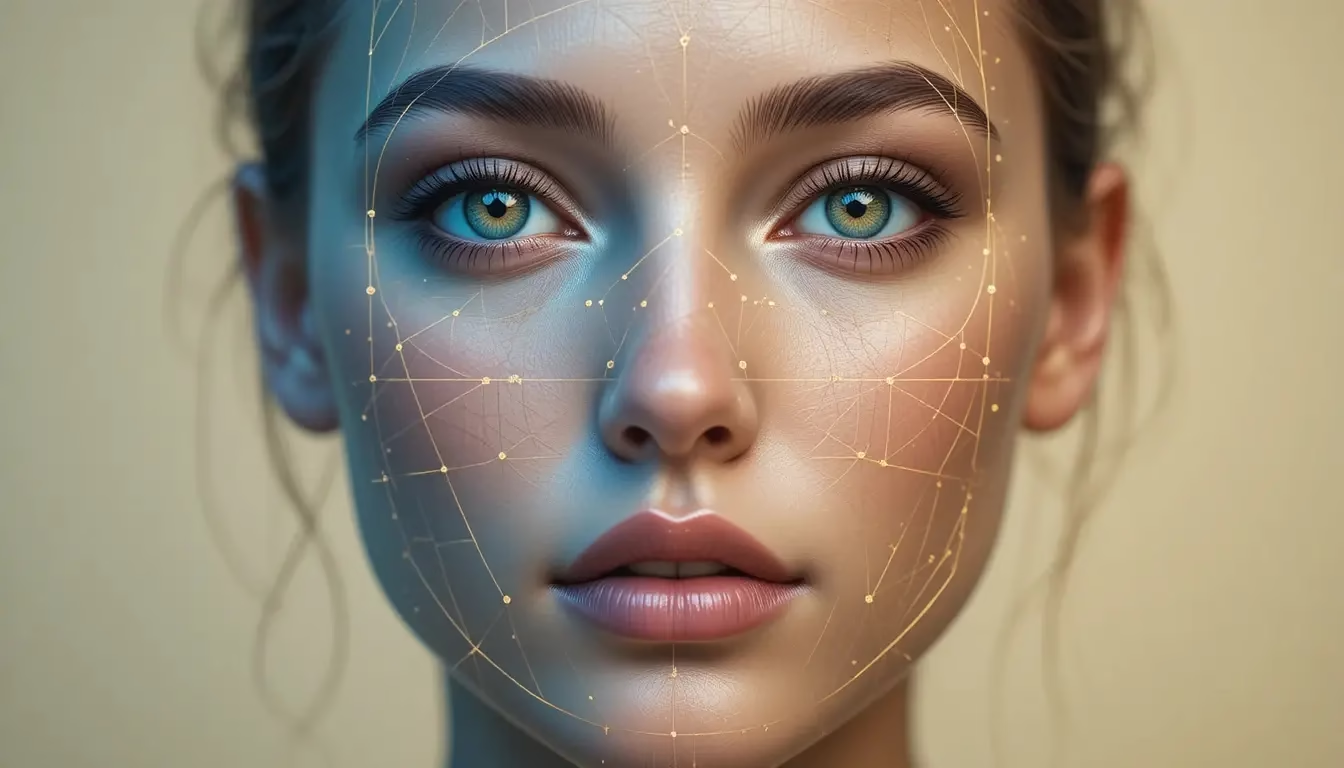
What Is the Golden Ratio in Beauty? (Phi 1.618 Explained)
Golden Ratio in Beauty.
Introduction:
The idea of a “perfect face” has fascinated artists, scientists, and designers for centuries. One concept that repeatedly appears in discussions of beauty is the Golden Ratio (Φ ≈ 1.618).
From ancient architecture to modern AI face analysis, this mathematical proportion is often used to explain facial balance, harmony, and visual appeal. But what exactly is the Golden Ratio, and how does it relate to beauty?
What Is the Golden Ratio (Φ 1.618)?
The Golden Ratio, also known as Phi (1.618), is a mathematical relationship where the ratio of two quantities remains constant. It is closely linked to the Fibonacci sequence, where each number is the sum of the two preceding ones.
This ratio appears in:
Nature (flowers, shells, galaxies)
Architecture (historical monuments)
Art and design (composition and balance)
Because of its natural occurrence, the Golden Ratio is often associated with aesthetic harmony and proportional balance.
How the Golden Ratio Applies to the Human Face
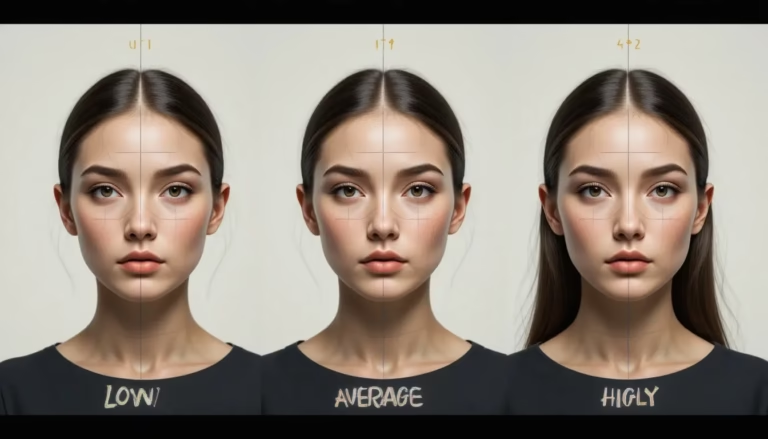
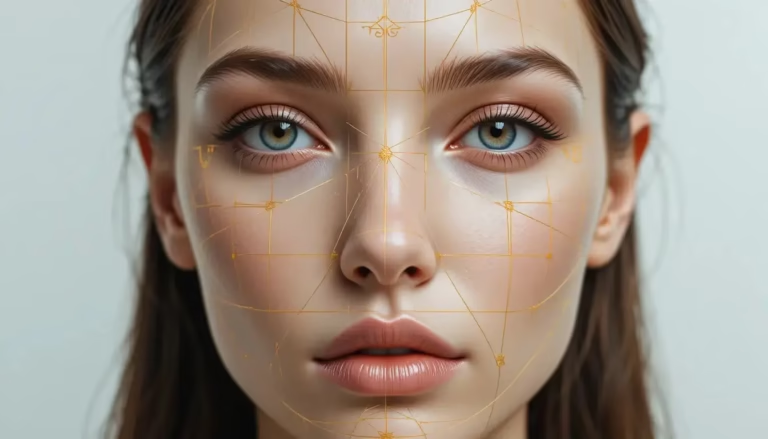
In facial aesthetics, the Golden Ratio is used to evaluate how different parts of the face relate to each other.
It looks at proportions such as:
Face length vs face width
Eye spacing relative to face width
Nose width compared to mouth width
Distance between facial features
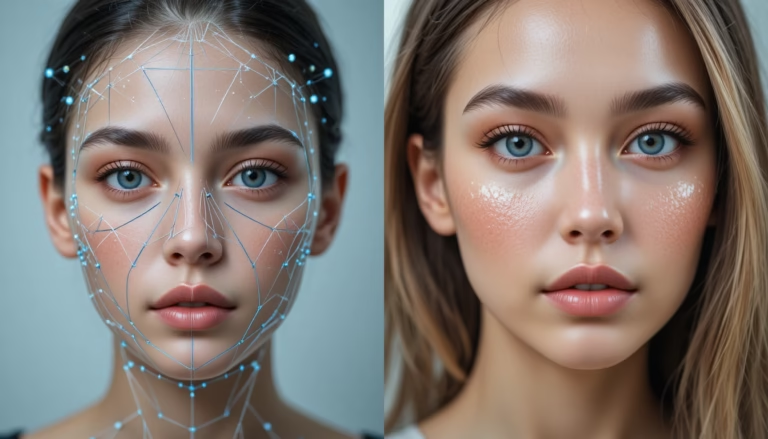
Modern AI face analysis tools use these relationships to study facial structure and proportional alignment.
Golden Ratio vs Facial Symmetry
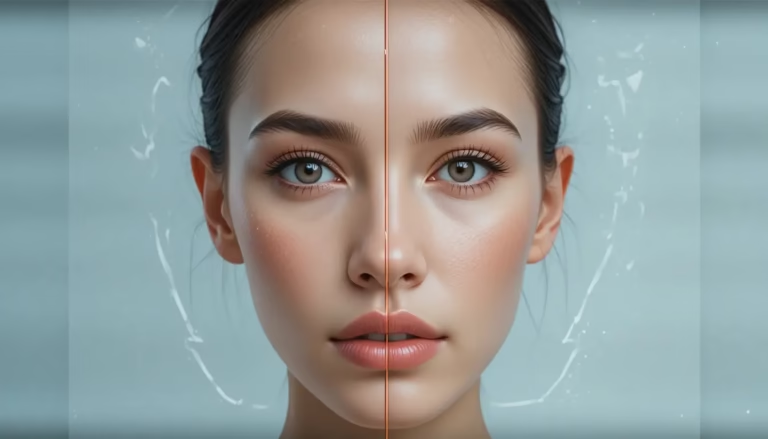
Although closely related, the Golden Ratio and face symmetry are different concepts.
Golden Ratio → focuses on proportions between features
Face symmetry → focuses on left-right balance
👉 If you want a deeper understanding of symmetry, you can read about face symmetry and its role in beauty.
Together, these concepts help explain why certain faces appear more balanced and visually appealing.
Why the Golden Ratio Is Associated with Beauty
The Golden Ratio is often linked with attractiveness for several reasons:
🔹 1. Natural Balance
Proportions close to Φ tend to look more structured and harmonious.
🔹 2. Visual Processing
The human brain prefers patterns and balance, making these proportions easier to interpret.
🔹 3. Historical Use
Artists like Leonardo da Vinci used similar proportions in their work to create visually appealing compositions.
Is the Golden Ratio a True Measure of Beauty?
Not exactly.
While the Golden Ratio provides a useful framework, beauty is influenced by many other factors:
Cultural standards
Individual uniqueness
Facial expressions
Personality and confidence
👉 The Golden Ratio is best understood as a guideline for facial harmony, not a fixed rule.
How Modern Technology Uses the Golden Ratio
Today, the Golden Ratio is applied using AI and computer vision technologies.
These systems:
Detect facial landmarks
Measure distances between features
Compare ratios with Φ (1.618)
Generate structured analysis results
You can explore these concepts using an AI face analyzer that evaluates facial proportions and balance.
Limitations of Golden Ratio in Facial Analysis
Despite its popularity, the Golden Ratio has limitations:
It simplifies complex human features into numbers
It does not account for emotional expression
It varies across different cultures and preferences
👉 That’s why it should be used for insight, not judgment.
🔧 Try the Golden Ratio Tool
I also built a practical tool that calculates facial beauty using the golden ratio.
You can explore the source code and how it works here:
👉 Golden Ratio Face Analyzer Tool (GitHub)
Conclusion
The Golden Ratio (Φ 1.618) is a powerful concept that helps explain balance, proportion, and harmony in the human face.
While it plays a role in facial aesthetics, it is not the only factor that defines beauty. Every face is unique, and true attractiveness goes beyond mathematical formulas.
👉 If you’re curious about how these proportions apply in practice, you can explore them using an AI-based facial analysis tool.


3 Comments