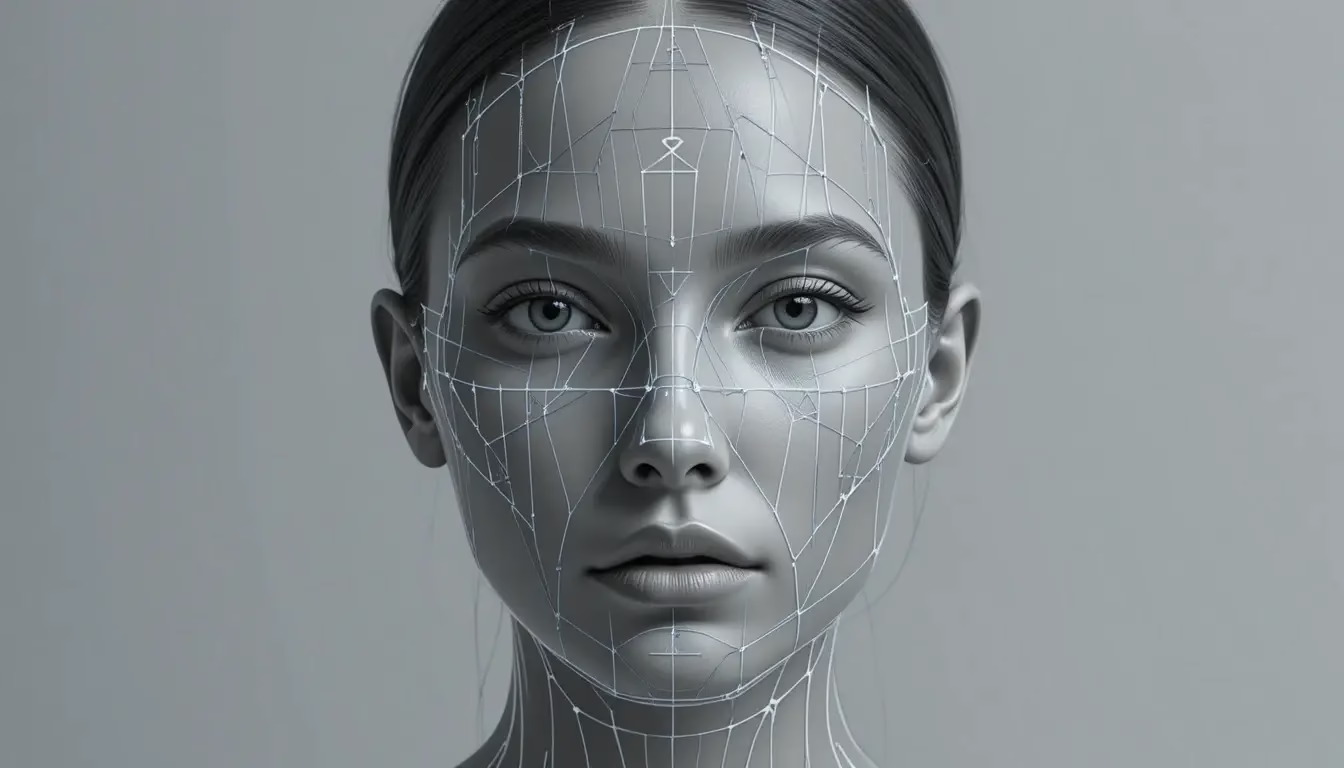
How Facial Proportions Affect Attractiveness (Science Explained)
How Facial Proportions Affect Attractiveness?
Introduction
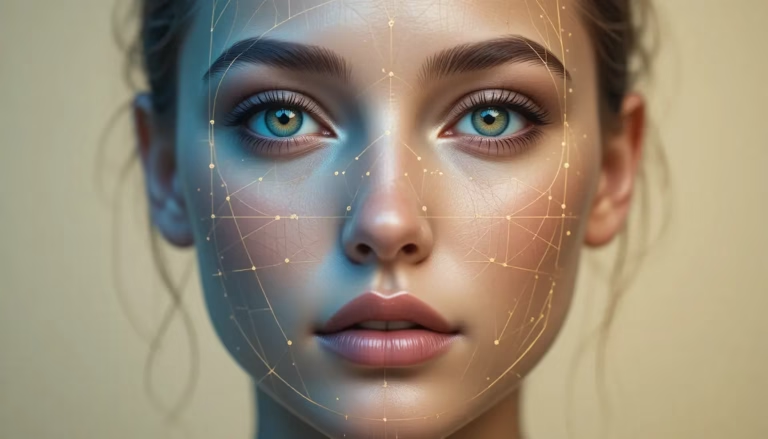
What makes a face look balanced and attractive? While beauty is often seen as subjective, research in facial aesthetics, psychology, and AI face analysis shows that facial proportions play a major role.
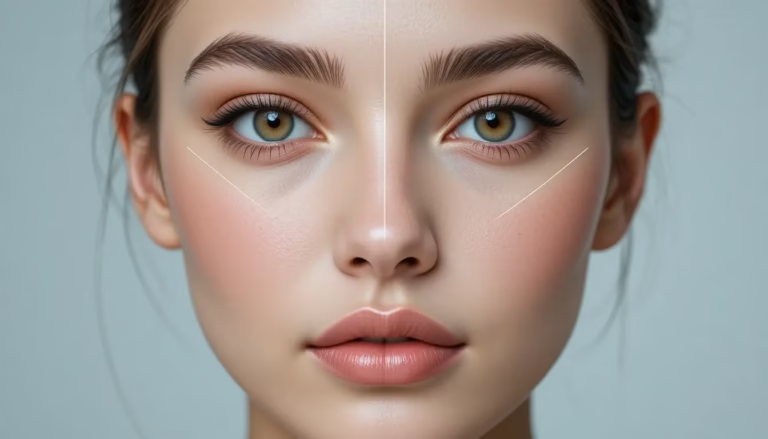
Facial proportions refer to the relationship between different features of the face—such as the eyes, nose, lips, and jawline. When these features are well-aligned, the face appears more harmonious, structured, and visually appealing.
What Are Facial Proportions?
Facial proportions describe how different parts of the face relate to each other in size, distance, and alignment.
Key proportional relationships include:
Face height compared to face width
Distance between the eyes
Nose width relative to the face
Mouth width in relation to the nose
These measurements help determine whether a face appears balanced or disproportionate.
Why Facial Proportions Matter in Attractiveness
Facial proportions influence how the brain perceives a face.
🔹 1. Visual Harmony
Well-balanced proportions create a sense of order and symmetry, making the face easier to process visually.
🔹 2. Structural Balance
When features are proportionate, no single feature appears too dominant or too small.
🔹 3. Natural Aesthetic Appeal
Proportional faces often align with patterns found in nature and design, contributing to perceived attractiveness.
Why Facial Proportions Matter in Attractiveness
Facial proportions influence how the brain perceives a face.
🔹 1. Visual Harmony
Well-balanced proportions create a sense of order and symmetry, making the face easier to process visually.
🔹 2. Structural Balance
When features are proportionate, no single feature appears too dominant or too small.
🔹 3. Natural Aesthetic Appeal
Proportional faces often align with patterns found in nature and design, contributing to perceived attractiveness.
Facial Thirds: A Key Concept in Proportions
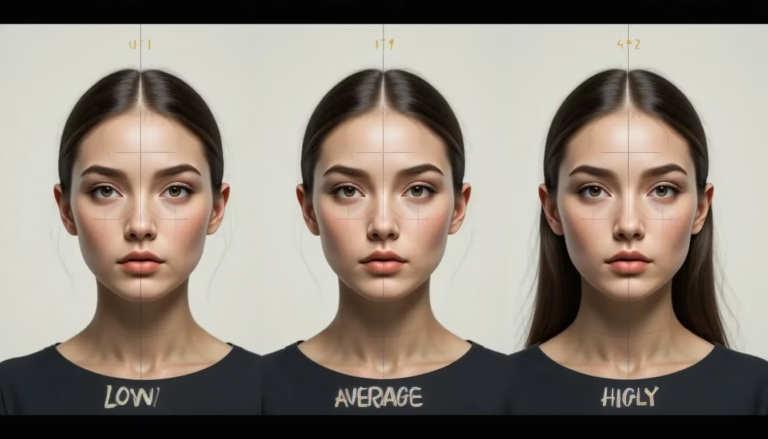
The face is often divided into three equal sections:
1. Forehead (hairline to eyebrows)
2. Mid-face (eyebrows to nose base)
3. Lower face (nose base to chin)
When these thirds are balanced, the face appears more proportionate.
Facial Thirds: A Key Concept in Proportions
The face is often divided into three equal sections:
Forehead (hairline to eyebrows)
Mid-face (eyebrows to nose base)
Lower face (nose base to chin)
When these thirds are balanced, the face appears more proportionate.
Common Proportion Imbalances
Some common variations include:
Wide or narrow eye spacing
Longer or shorter mid-face
Uneven facial thirds
Disproportionate nose or mouth width
👉 These are natural variations and do not necessarily reduce attractiveness.
Facial Proportions vs Symmetry
Although related, they are different:
Proportions → size and spacing of features
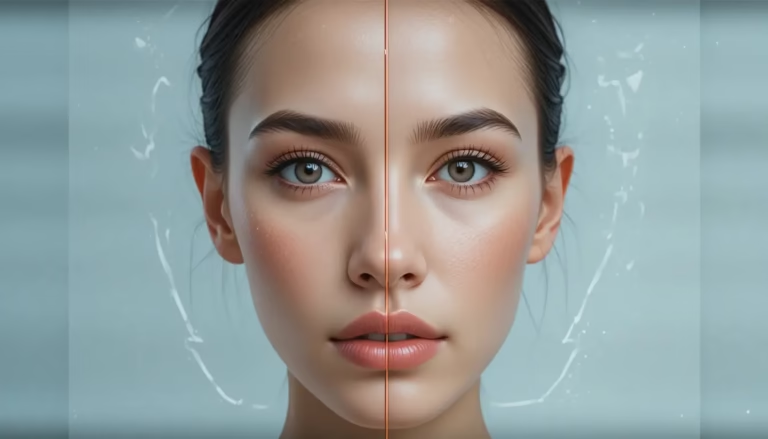
Symmetry → left-right balance
👉 For more details, read about face symmetry and its importance.
Together, they define overall facial harmony.
Can Facial Proportions Be Improved?
While bone structure cannot be easily changed, you can enhance appearance through:
Grooming and styling
Makeup techniques
Proper lighting in photos
Facial expressions and posture
These factors improve perceived proportions and balance.
Conclusion
Facial proportions are a key factor in determining how attractive and balanced a face appears. When features are aligned and proportionate, the face looks more harmonious and visually appealing.
While concepts like the Golden Ratio and AI face analysis provide useful insights, beauty remains a combination of structure, individuality, and perception.
👉 Curious about your facial proportions? Try an AI-based facial analysis tool to explore your facial structure and balance.